
Last week, I got a message from Jim Cruver about a video on concussions in hockey that he thought I should check out (thanks Jim!). This actually aired on ESPN mid-last week; it’s definitely worth the 7-minutes to watch. Check it out:
My pro-USA Hockey American Development Model stance continues. I applaud Kevin McLaughlin, Senior Director of USA Hockey’s Hockey Development program, for the steps he’s taking in trying to cut back on hockey concussions at younger levels, and most notably for pushing the checking age up to 13, instead of 11.
I know the contact-enthusiasts will argue against this change, but the bottom line is that the physical development range is too large and the psychosocial maturity is not developed enough at this level for checking to be safely and properly implemented. There needs to be a policy change in the interest of protecting our young players and Kevin McLaughlin is taking the steps to make this happen. If you’re initial thought is, “checking is a part of the game, and shouldn’t be removed from the 11-12 year-old level,” I’d urge you to consider how you may feel if your son was drilled from behind by a 12-year old that looked like a 16-year old, suffered a concussion, and missed 6 months of playing. The point isn’t that checking isn’t a part of the game, it’s that it’s being implemented the wrong way, especially at these younger levels. A change in emphasis needs to start with coaches and trickle down to players and parents, quickly.
The #1 concern in making this change is that players will be less “skilled” at giving and receiving contact at the 13-14 year-old level because they haven’t had as much practice or experience. Logical argument. I think the big thing is that MOST kids aren’t being taught how to give and receive hits at any age, they’re just told to go after people. But that argument aside, there’s actually been some research on this issue that will help shed some light on whether early exposure helps make contact safer at the bantam level.
Study 1:
Hagel, B., Marko, J., Dryden, D., et al. (2006). Effect of Bodychecking on Injury Rates Among Minor Ice Hockey Players. Canadian Medical Association Journal, 175, 155-160.
This study looked at the effect on injury rates that a particular rule change had. This rule change moved 11-year olds into a contact league with 12-year olds, opposed to keeping them in a non-contact league with 10-year olds. Notable results:
- The 11-year olds in the contact group had a 2.1x higher incidence of injuries than 11-year olds in a non-contact group. This injury rate was 85.5 per 1,000 players (astronomically high).
- More than 2x greater incidence of injuries classified as “severe” amongst 11-year olds in contact group.
- Contact-group had 3.4x greater incidence of concussions and 2.6x greater incidence of fractures
Study 2:
Macpherson, A., Rothman, L., & Howard, A. (2006). Body-Checking Rules and Childhood Injuries in Ice Hockey. Pediatrics, 117, e143-e147.
This study aimed to compare injury levels between Ontario youth hockey leagues (allowed body checking at 10-11 y/o range) and Quebec youth hockey leagues (allowed body checking at 14-15 y/o range). Straight from the abstract:
“Of the 4,736 hockey injuries, 3006 (63%) were in Ontario and 1730 (37%) were in Quebec. Most of the injuries occurred in areas in which checking was allowed (2824 [59.6%]). At ages 10 to 13, players had significantly greater odds of suffering a checking injury where checking was allowed (odds ratio [OR]: 1.86). Players in this age group were also more likely to suffer a concussion (OR: 1.42) or fracture (OR: 1.25) where checking was allowed. Among older players, when checking was allowed in both provinces, there were higher odds (OR: 1.90) of receiving a checking injury in the province that had introduced checking at a younger age, suggesting that there is no protective effect from learning to check earlier.”
Last sentence bolded for emphasis. Basically what this is saying is that players that have been checking since the 10-11 y/o age, were TWICE as likely to sustain a checking-related injury at the 14-15 y/o level compared to those that were just checking for the first time at this older age level.
These are far from the only two studies that illustrate these points, but they’re a good start. The take home messages from these studies is that introducing checking at younger ages substantially increases the injury rate at these levels, AND has absolutely no protective effect at older levels. In laymen’s terms, it’s a lose-lose.
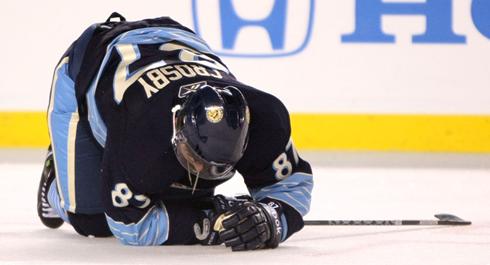
Hockey can’t afford to lose any more players like this.
Hockey needs to get away from the “hit to hurt” mentality and get back to teaching the original intention of contact in the sport-separation of the player from the puck. Every hockey fan loves to watch a big hit, but we need to keep the potential consequences of these hits in mind. Some of the game’s best players have their careers cut short because of hits that probably shouldn’t have ever happened. Concussions in hockey deemed accidents are one thing, but coaches and parents (and even players!) encouraging players to take a run at someone is unacceptable. Hopefully the injuries to popular players like Sidney Crosby and Marc Savard, AND a growing body of research evidence will fuel a much-needed change in both the rules and teaching of the game.
To your HEALTH and success,
Kevin Neeld
P.S. Just a quick reminder that this webinar with Joe Dowdell is in a few days. If you’re interested in building a profitable fitness business, make sure you register today before all the spots are gone! The 5 Key Ingredients to Building a Successful Fitness Business & Career
post comments
Together We Rise: A Campaign for Everyone