
As long as I’ve been around the game, I’ve heard players and coaches preach about the importance of wrist strength. As a player, I bought in hard. I had an old skate lace wrapped around a broken stick, with a weight plate at the far end. I actually had a few, with different weights at the end. At some point, a coach had convinced me that doing that exercise would improve my wrist strength, which would improve my shot power. I still hear players talking about this now. And, although the athletes at Endeavor have come to expect my skepticism regarding mainstream training practices, many are still surprised to hear me dismiss the importance of doing extra exercises to improve the wrists/forearms. Let me explain.
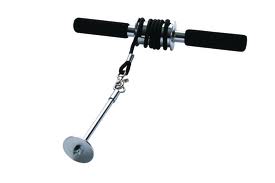
Will this improve your shot power? Not likely.

Where does the power come from?
There are several specific ways to train off the ice for improved shot power. Naturally, if we’re training with a specific goal in mind (as we always should be), we need to have a comprehensive understanding of the movement patterns and involved musculature that we’re targeting. Simply, if we can’t see the target, we’re unlikely to hit it.

When most players think of shot power, they think of the wrists. The wrists are an important piece of the puzzle, but they’re FAR from the primary power generators. The overwhelming majority of the power comes from the hips and core, which is then transferred through the shoulders, arms, and refined by the wrists. The relative and absolute amount of power generated through the hips and core differs depending on the type of the shot. This power path is easy to visualize in a slap shot, but it’s still present in snap shots, wrist shots, and back hands. In realizing this, consider the amount of musculature involved in the hips, core, and shoulder musculature, and then compare it to that of the forearms.
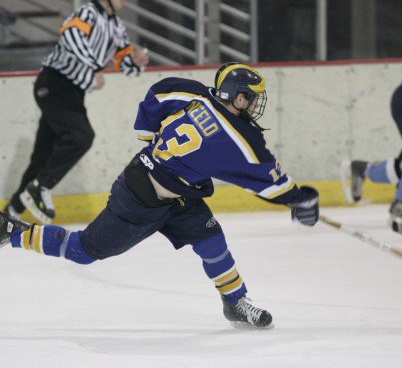
The wrists are more active in force transfer and directional refinement than power generation.

If you want to improve shooting power, you need to develop massive legs and hips, a strong core, and maintain appropriate mobility through the hips and thoracic spine. The benefit of this approach is that it’ll also make you substantially faster on the ice.

I had a conversation with Mike Boyle several years ago where he only half-jokingly said something along the lines of “it doesn’t matter how strong their wrists are, they’re too slow to get to the puck anyway.” Conveniently, the best approach for the overwhelming majority of players to develop a stronger shot is also the same approach they should take to get faster.

Diaper and partial convulsions optional. Heavy training mandatory.
Movement vs. Muscles
Another major argument against players performing extra wrist work lies in the lack of specificity in the movement pattern. For starters, the velocity of traditional exercises (e.g. all forms of wrist curls) doesn’t come REMOTELY close to that of shooting.  Also, with the understanding that shooting power is largely synonymous with rotational power, performing repeated wrist flexion/extension exercises doesn’t seem very appropriate. A better option would be to use a variety of rotational medicine ball exercises to develop this quality.

Med Ball Shotput w/ Rapid Step Behind & Partner Toss

Front Standing Med Ball Scoop w/ Partner Toss
These videos are a couple years old. As an aside, 5 of the 6 kids in the first two videos have moved on to play NCAA D1 hockey (the 4th is playing D3). Of the players in the third video, one advanced to play in the ECHL (as a former D3 player), one was already playing D1, two more have moved on to play D1, and one has a full ride commitment to Boston College and is playing in the USHL. Simply, training hard works.

Overlooked Forearm Work
Finally, most players do drastically more forearm work than they probably realize. If your program encompasses exercises like trap bar deadlifts, stiff-legged deadlifts, dumbbell reverse lunges, dumbbell RFE split squats, farmer’s walks, and any other exercise that involves holding something heavy in your hands, like it should, the stimulus to the forearm and wrist musculature is huge. I’m aware there are different forms of grip, but in general I think performing these exercises in parallel with some periodic puckhandling and shooting on or off the ice is sufficient to meet the needs across the wrist joint.

Take Home Message
Doing some extra forearm work throughout the off-season likely won’t hurt, but it’s far from necessary and should NEVER take the place of more purposeful off-ice training. If your goal is to improve your shooting power, focus on improving lower body and core strength, maintaining good mobility through your hips and thoracic spine, and on rotational power exercises, such as those in the videos above.

To your success,

Kevin Neeld

Please enter your first name and email below to sign up for my FREE Athletic Development and Hockey Training Newsletter!


post comments

  1. Greg May 24, 2012 at 1:34 pm - Reply

    Kevin – Very nicely done. I work in baseball and have been drawing parallels to hockey performance more and more as of late (seeing as I’ve been able to watch my Devils in the playoffs but the regular season is tough while I’m in AZ). All of the same tips to improve shooting power are similar to improving pitch velocity or batting power. Strong legs & core with mobility in the hips & thoracic spine are all things we strive for among others. Good work, thanks for the info – Greg

    • Kevin Neeld May 24, 2012 at 5:25 pm - Reply

      Greg – Thank you for your comments. You’re right to draw the parallel to baseball. Both rely heavily on rotational power. I came across some research relatively recently dissecting out proportions of force production in throwing throughout the different joints of the body. As you’d expect, the overwhelming majority of the power stems from lower body/hips/trunk. Those that compensate for limitations lower in the body with augmented force production higher up tend to get injured.

  2. Denny May 25, 2012 at 5:58 am - Reply

    Kevin,

    Interesting article. As a high school baseball player I did the same thing. Had a homemade device that my Dad made and worked out my arms until I was like pop-eye. In retrospect, it probably didn’t help much at all. Great article that I made a lot of sense.

    Let me ask this, having stronger wrists/forearms, wouldn’t that still help in making strong passes and when taking those quick snap shots from down load?

  3. Mike Sheedy May 25, 2012 at 7:49 am - Reply

    Kevin,

    Not a trainer just a Dad with a hockey playing son. He had been advised on improving wrist strength. Thanks for setting the record straight. You advise that development of leg, hip, and core strength is more important for shooting power and speed on the ice. What is your opinion on skating treadmill training for this purpose?

    Thanks.

  4. Kevin Neeld May 25, 2012 at 8:48 am - Reply

    Denny-Absolutely. But a significant piece of the ability to make strong passes and fire quick shots stems from the variables mentioned in the article, body position, and timing. I can say, confidently, that if wrist strength is the limiting factor for a player not being able to pass the puck harder, they’re probably not strong enough to support their own body weight on the ice (think Bambi).

  5. Kevin Neeld May 25, 2012 at 8:51 am - Reply

    Mike-Skating treadmills can serve their purpose if used properly with some players, but they’re certainly not the only answer and can create as many problems as they can fix if used inappropriately. I haven’t talked much about the topic over the last several years, but I did write a piece on skating treadmills in 2009 if you want to give it a quick read: http://www.kevinneeld.com/2009/the-truth-about-blade-skating-treadmills

  6. Robin July 7, 2014 at 4:16 pm - Reply

    Great article kevin. I think, i have worked my twist arm since i was about ten years Old. And it dosent work in for my shootting ability.

    But what/think you are the best exercise to improve my wrist shoot? And also snapshot?

    • Kevin Neeld July 7, 2014 at 6:53 pm - Reply

      Robin-Do a quick search on my site for shooting power. I’ve written about this topic a lot in the past. There are no magic exercises to shoot harder, especially at your age. Keep getting stronger and your shot power will continue to improve.

  7. Emmanuel September 18, 2014 at 1:47 am - Reply

    Hi kevin, great article, as always!

    If one wanted to train wrists and forearm strength for situations when you are handling the puck with one hand (say when you are coming off the boards or cutting to the middle with your other arm out to help protect the puck). How should one go about doing it?

    • Kevin Neeld September 26, 2014 at 7:17 am - Reply

      Emmanuel-I don’t know that anything more than practicing these motions in addition to following a quality full body strength training program is necessary. That said, you can work on just holding your stick straight out, while raising and lowering it using movement at the wrist only. This should be the “icing on the cake” to strengthen the muscles around the wrist.

  8. Registrasi March 11, 2025 at 4:51 pm - Reply

    I don’t think the title of your article matches the content lol. Just kidding, mainly because I had some doubts after reading the article.

  9. binance- March 13, 2025 at 3:36 pm - Reply

    Thanks for sharing. I read many of your blog posts, cool, your blog is very good.